In the latest AskMadhav episode, Realme CEO Madhav Sheth confirmed that the launch date for the Realme GT Neo 2 will be announced soon and that the Realme GT Master Explorer Edition will not be launching in India. It is also confirmed that the GT Neo 2 and Buds Air 2 will be launching in a Green colour option. Additionally, Sheth also confirmed that the recently axed ...
from Gadgets 360 https://ift.tt/2ZGKAsV
Thursday, September 30, 2021

Bitcoin and Ether See Dips After a Day’s Gain With Cryptocurrencies Seeing Red
Cryptocurrencies like Litecoin and Bitcoin Cash opened with minor gains today, while most other popular crypto coins including Bitcoin and Ether witnessed a dip.
from Gadgets 360 https://ift.tt/2ZD1oB6
from Gadgets 360 https://ift.tt/2ZD1oB6
Popular Smart Lights to Check Out
Smart lights allow users to choose from millions of colours to set the mood, and some of them even support voice assistants. Here are some smart lights if you are looking to set the tone right in your room.
from Gadgets 360 https://ift.tt/3uvvli8
from Gadgets 360 https://ift.tt/3uvvli8
Popular Budget Fitness Trackers to Check Out
Fitness trackers, or smart bands, may not be as flashy as smartwatches but they fulfill the basic activity tracking. Here are some budget options for you.
from Gadgets 360 https://ift.tt/3zTtDb7
from Gadgets 360 https://ift.tt/3zTtDb7
Popular Multi-Function Ink Tank and Inkjet Printers to Check Out
Multi-function printers enable users to print, scan, and copy their documents. If you are looking for one, here are a few popular multi-function ink tank and inkjet printers.
from Gadgets 360 https://ift.tt/3kXLycI
from Gadgets 360 https://ift.tt/3kXLycI
Samsung Galaxy Z Fold 2’s October patch starts rolling out in one region

Credit: Eric Zeman / Android Authority
Welcome to the Samsung Galaxy Z Fold 2 update hub. Here you’ll find the latest information on updates to Samsung’s flagship foldable phone. We’ll detail the current software versions for the device and alert you if there’s a new update rolling out. Samsung usually pushes out One UI updates regularly, but availability may be affected by variant, carrier, and region.
- Current stable version: Android 11
- When will the Samsung Galaxy Z Fold 2 get Android 12? Late 2021 (Estimated)
Latest Samsung Galaxy Z Fold 2 updates
October 1, 2021: Samsung is rolling out the latest update to the Galaxy Z Fold 2 in South Korea, just days after the Galaxy Z Fold 3 and Galaxy Z Flip 3 gained their October patches. According to SamMobile, the latest bump bears firmware version F916NKSU1DUI4 and brings the October 2021 Android security patch.
from Android Authority https://ift.tt/3nxctdn
Redmi Note 10 Lite With Quad Rear Cameras, 5,020mAh Battery Launched in India: Price, Specifications
Redmi Note 10 Lite has launched in the Indian market. The phone is priced at Rs. 13,999 for the 4GB RAM + 64GB storage option, Rs. 15,999 for the 4GB RAM + 128GB storage option, and Rs. 16,999 for the 6GB RAM + 128GB storage model. It will go on sale on October 2.
from Gadgets 360 https://ift.tt/3kYGVyW
from Gadgets 360 https://ift.tt/3kYGVyW
Instagram Content of Kim Kardashian, Other Celebrities Linked to Negative Feelings, Shows Facebook Research
Instagram of celebrities including Kim Kardashian, Justin Bieber, and Charli D'Amelio may cause their followers to experience more negative feelings about their self-image, according to internal Facebook research reported by the Wall Street Journal.
from Gadgets 360 https://ift.tt/3ijCf4P
from Gadgets 360 https://ift.tt/3ijCf4P
Facebook Research Shows Company Knew of Instagram Harm to Teens, Say US Senators
Facebook at a US senate hearing on Thursday was accused of concealing the negative findings about Instagram and demanded a commitment from the company to make changes.
from Gadgets 360 https://ift.tt/39S3eA7
from Gadgets 360 https://ift.tt/39S3eA7
Zoom, Five9 to Terminate Nearly $15 Billion Deal After Shareholder Vote
Zoom’s acquisition of Five9 in a $14.7 billion deal was called off after Five9 shareholders voted it down in a major blow to Zoom's plan to expand its offerings following its pandemic boom.
from Gadgets 360 https://ift.tt/3iorSgb
from Gadgets 360 https://ift.tt/3iorSgb
FIFA 22 Review: More Arcade Than Ever
FIFA 22 review: the PC, PS4 and Xbox One version of EA Sports’ new football game is all over the place, somehow both more arcade-ish and more lifelike than before. FIFA 22 released October 1 on PC, PS4, PS5, Stadia, Xbox One, and Xbox Series S/X.
from Gadgets 360 https://ift.tt/2YjpqAK
from Gadgets 360 https://ift.tt/2YjpqAK
Netflix India October 2021 Releases: The Office, Little Things Season 4, and More
The Office (US), Little Things season 4, Sivaji, Army of Thieves, Locke & Key season 2, Call My Agent: Bollywood, Seinfeld, The Guilty, Maya and the Three, The Conjuring, Fight Club, Forrest Gump, Mr. & Mrs. Smith, The Twilight Saga — the biggest movie and TV show releases on Netflix India in October 2021.
from Gadgets 360 https://ift.tt/3uFYHKN
from Gadgets 360 https://ift.tt/3uFYHKN
Motorola Edge 20 Pro to Launch in India Today: Expected Price, Specifications
Motorola Edge 20 Pro will launch in India today at 12pm IST (noon). The flagship smartphone from Motorola will sport a 144Hz refresh rate 10-bit AMOLED display with HDR10+ support. It will be powered by a Snapdragon 870 SoC paired with 8GB of LPDDR5 RAM and 128GB of UFS 3.1 storage. Its triple rear camera setup will be headlined by a 108-megapixel primary sensor.
from Gadgets 360 https://ift.tt/2Ww7Cle
from Gadgets 360 https://ift.tt/2Ww7Cle
The best Boost Mobile deals: Save 49% on a 5GB prepaid plan

If you want to switch to a contract-free prepaid carrier in the US, Boost Mobile is one of the best options around. It has a wide range of premium and affordable smartphones available and provides many deals on devices and plans. The Sprint and T-Mobile merger has resulted in one major change for the best Boost Mobile deals — the MVNO is now part of Dish Network.
In other words, Boost is going to be around for a while. We still highly recommend the carrier and feel that now is a great time to sign up, as there are plenty of solid deals to be had this month.
from Android Authority https://ift.tt/2F2biRF
Samsung Galaxy A12 review: Sluggish but stylish starter smartphone
Samsung’s Galaxy A12 budget smartphone is more than just an iterative update over the Galaxy A11 — with a bigger battery, another camera, and so much more on board. Value hunters will also appreciate that Samsung managed to keep its sub-$200 price tag. How well do these new upgrades fare? Let’s find out in our Samsung Galaxy A12 review.
Samsung Galaxy A12 Buy it Now
$179 .99
What you need to know about the Samsung Galaxy A12

from Android Authority https://ift.tt/3AZG5rd
Samsung Galaxy S21 FE: What we know so far (Updated: Sep. 30)

Credit: David Imel / Android Authority
Update, September 30, 2021 (03:58 PM ET): We’ve updated our Galaxy S21 FE hub with new rumors suggesting the phone could be heavily delayed — or even canceled entirely.
Original article: In 2020, the Samsung Galaxy S20 FE (which stands for “Fan Edition”) surprised us all with how good it was. In fact, it was so good that it ended up walking away with our 2020 Best of Android Editor’s Choice award. With that kind of pedigree behind the phone, it’s no surprise that we are very excited about the Samsung Galaxy S21 FE.
from Android Authority https://ift.tt/39mcAnD
Find the right USB-C cable and charger for your needs with these new logos

- The USB Implementers Forum has released new USB-C logos for certified cables and chargers.
- The new logos should make it clear which USB-C cables support the newer 240W power charging standards.
- There are also new logos to help identify cables with the USB4 data delivery standards.
Buying a new smartphone, tablet, or laptop is complicated enough for many people. However, it becomes even more complicated when you want to buy a new USB-C cable and charger for your device or for transferring data. Today, the USB Implementers Forum, which helps support the various USB standards, has approved packaging and product logos for the newer devices that support the most recent advances.

from Android Authority https://ift.tt/3kTSuaI
Sony WH-XB910N Wireless Headphones With ANC, Sony WF-C500 Earbuds Launched: Price, Features
Sony WH-XB910N wireless headphones and WF-C500 true wireless stereo (TWS) earphones have been launched in the UK. Sony WH-XB910N are the company’s new mid-tier headphones with active noise cancellation and extra bass, carrying a price tag of EUR 180 (roughly Rs. 15,500). Both products support the Swift Pair and Android Fast Pair features.
from Gadgets 360 https://ift.tt/3zPpOE5
from Gadgets 360 https://ift.tt/3zPpOE5
Elon Musk Advises Jeff Bezos to Spend Energy on Reaching Orbit Than Filing Lawsuits as Space Rivalry Heats Up
Elon Musk in a recent interview took a fresh dig at Jeff Bezos saying that he should focus on reaching the orbit rather than filing lawsuits. Musk's comments were about Bezos' Blue Origin filing a case to block SpaceX's NASA moon lander contract.
from Gadgets 360 https://ift.tt/3AYYFzG
from Gadgets 360 https://ift.tt/3AYYFzG
Daily Authority: Uninstall the latest Trojan, now ⚠
Happy Thursday. Jonathan here to fill in while Tristan is afk to tackle some bts stuff. Did I use those correctly?!?!
 We'd like to again thank our sponsor OnePlus! Today is the last day to take advantage of their awesome deals on Buds and a new phone!
Get $20 off with code BUDSPRO20 when you purchase the newest OnePlus Buds Pro, limited time only!

Save up to $219.99 with the OnePlus 9 Pro and the new OnePlus Buds Pro.

Fun stuff on the horizon, but a bug to squash first

It's always a bad day when we learn of a vulnerability in our favorite operating system. This time around, it's a Trojan called Grifthorse that's floating around to steal your money.
- Grifthorse presents itself as a prize, then asks you for your phone number.
- Upon providing your phone number, you are automatically subscribed to SMS based recurring payments.
How to spot the problem:
- This Trojan has been found in dozens of apps, and will present itself differently for each, but the general thing to look for is an unexpected prize or gift from an app that doesn't usually give you gifts or prizes.
- Below is a sample of just one implementation.

What do I do now?
- Are you still reading this? You should have already clicked that link above that takes you to our full list of all affected apps, then uninstalled them!
- Check your phone bill. If you see a weird subscription plan that you do not recognize, contact your provider to see if they can help.
- Need a new app to do that thing? We've got hundreds of app lists designed to help you find the best of the best for many different uses.
- Last thought, when it comes to the internet, if it sounds too good to be true, it usually is. Please, practice safe hex.
Roundup
 It will not help your vision, but Google is pretty excited to be adding Google Lens to the Chrome browser. (Android Authority)
 Rumor says the Galaxy S22 will have a small battery, is that disappointing? Know all we know about the upcoming Samsung phone in our S22 rumor roundup. (Android Authority)
 You told us: Most of you like Samsung's new UI, based off of the One UI 4.0 beta release. (Android Authority)
 Sony's latest headsets should appeal to mid-tier shoppers seeking premium features. (Android Authority)
 The United States and the EU are in talks (Bloomberg) to promote better trade, and unify technology on a global basis. This is partly to help secure sensitive technologies, to adopt standards, and to help fix the ongoing semiconductor shortages. (Android Authority)
 We hope you are as excited about foldable phones as we are, and it turns out that Google might actually be on board as well. (Tom's Guide)
 Google's Stadia isn't dead! It just received party chat. (9to5 Google)
 Facebook Reels are rolling out, with a significant barrier to entry. (CNET)
 Google Meet is getting animated backgrounds for meetings on Android. (Android Community)
 Game on! NBA 2K Mobile Season 4 is rolling out to Android. Get the update for new features and some rewards. (Phone Arena)
Wallpapers and fun facts
It's not often enough that we make our own posts that are just for fun, but we're excited to be launching our new Wallpaper Wednesday series. Yesterday kicked it off, where we shared a few great wallpapers collected from our team, and from readers like you!
Check it out, and consider submitting your own Wallpaper Wednesday submission.
This one is my favorite:

Some fun facts:
- Did you know: Samsung is almost 40 years older than Apple.
- Apparently, about 40% of new American couples met online.
- The Space Shuttle program has flown over 113 flights since 1981.
Tristan is back tomorrow, thanks for sticking with me,
Jonathan Feist
from Android Authority https://ift.tt/3iknDlV
Vivo X70 Pro Plus review: A true premium flagship experience?
Vivo made its camera-related aspirations known with the X60 series that launched in early 2021. These were the brand’s first phones to showcase its partnership with storied camera tech brand Zeiss. The X60 Pro Plus, in particular, impressed us on the photography and videography front thanks to its novel micro-gimbal stabilization system and solid performance from the main and zoom cameras.
Yet, while it was a camera phone enthusiast’s dream, the X60 Pro Plus wasn’t perfect as an actual smartphone. It lacked wireless charging, an IP rating, and a QHD+ panel. These aren’t complete deal-breakers for more affordable phones, but Vivo was charging Rs 69,999 (~$950) for the device in India, putting it on par with full-fledged premium flagships from rival brands. And these rivals had all three features in tow, plus competitive cameras of their own.
Vivo is looking to solve all that with its successor, the Vivo X70 Pro Plus. Did the company learn from these previous missteps and fix where the older phone went wrong? Find out in this Vivo X70 Pro Plus review.
Vivo X70 Pro Plus Buy it Now
Rs79990 .00
About this Vivo X70 Pro Plus review: I tested the X70 Pro Plus (12GB/256GB) over a period of eight days. It was running software build number PD2145F_EX_A_3.11.4 on the August 2021 security patch out of the box. It got updated to build number PD2145F_EX_A_3.11.8 halfway through the review period. The unit was provided by Vivo for this review.
What you need to know about the X70 Pro Plus

Credit: Hadlee Simons / Android Authority
- Vivo X70 Pro Plus (12GB/256GB): Rs 79,990 (~$1,077)
The Vivo X70 Pro Plus picks up where the X60 Pro Plus left off just over six months prior, supplanting it as Vivo’s flagship release for 2021. That means it’s running flagship silicon, has fast charging capabilities, and delivers a slick design. Unlike its predecessor, it also offers those aforementioned premium extras like a QHD+ screen, IP68 rating, and wireless charging.
The phone’s major selling point is still in the camera experience though. Vivo offers a similarly flexible camera system to the X60 Pro Plus, keeps the micro-gimbal stabilization system on the ultra-wide camera, and maintains the Zeiss partnership. It’s also a notable release for Vivo as it’s using an in-house imaging chip for the first time in company history, promising to reduce noise, improve efficiency, and more.
See also: The best Android phones
Vivo’s new premium flagship launched in China earlier this month alongside the X70 Pro and regular X70. It’s available in black, blue, and orange colorways. Those hoping for a more vibrant color option might be disappointed to find that only the black version seems to be available outside China. As for other markets, Vivo has confirmed that it’ll launch the X70 Pro Plus in India on September 30. We hope EMEA markets eventually get in on the action too, as the X60 Pro Plus was only available in China and India. US availability will almost certainly be a no-go, unless you fancy importing it, of course.
While there are other storage/RAM configurations in China, only the 12GB/256GB variant is available outside its home market. Otherwise, you’re getting a 66W charger, a USB cable, USB-C earbuds, a SIM ejector tool, and a plastic case in the box.
Design: Two steps forward, one step back

Credit: Hadlee Simons / Android Authority
One of the first things you’ll notice about the X70 Pro Plus is its size. For reference, it’s slightly taller and wider than the already large Oppo Find X3 Pro and roughly the same height as and a little narrower than the Galaxy Note 20 Ultra, but it feels more ergonomic than Samsung’s phone. Nevertheless, it’s way bigger than the X60 Pro Plus and you’ll definitely find it’s a stretch to reach the top third of the screen if you’re like me and don’t have large hands.
I quite like alternatives to glass and plastic backs, so I’ll admit I was a little disappointed to hear that Vivo dropped the X60 Pro Plus’s faux leather rear cover. The company has instead opted for a so-called “Fluorite AG” glass back here. Vivo says this is a “crystallized glass with a prismatic surface,” and the end result is a glass back that doesn’t really feel like glass.
The Vivo X70 Pro Plus has a rather different, cool take on glass backs.
Instead, the phone’s black rear cover feels more like a matte finish, complete with a rubber Vivo logo. The best part is that you have to try really hard to leave fingerprint grease on the rear cover. However, the phone feels quite slippery, even when compared to other smooth glass-toting phones. Fortunately, Vivo includes a case in the box.
The rest of the phone is suitably premium, featuring Gorilla Glass Victus for the curved screen, a black metal frame that tapers on the left and right edges, and the power/volume rocker combo on the right-hand side. The top and bottom of the X70 Pro Plus are almost identical to its predecessor, including the somewhat weird “professional photography” branding we saw last time out. At least the actual text is a little smaller this time.

Credit: Hadlee Simons / Android Authority
Perhaps the biggest change over the previous release is the camera housing, with Vivo opting for what is fundamentally the same housing but with a polished ceramic panel to the right of the camera bump itself. This is purely here for aesthetic purposes. The distorted reflection means it doesn’t make for a good mirror for selfies, as you might expect it to. In any case, I would’ve liked to see the company go for a horizontally arranged camera housing instead, ditching the panel in the process and reducing wobble when the phone is flat on a surface.
How about the cameras?

Credit: Hadlee Simons / Android Authority
Vivo is offering a similar camera setup as the previous phone, but we do see the 32MP 2x telephoto camera being swapped out for a 12MP 2x shooter with OIS instead. Otherwise, we’ve still got that Samsung Isocell GN1 main camera, a 48MP IMX598 ultra-wide camera with micro-gimbal stabilization, and an 8MP 5x periscope lens. The company further claims that the use of high-transmittance glass lenses and Zeiss’s T* lens coating should result in reduced lens flare. Finally, the new phone brings a custom V1 imaging chip to reduce noise and improve efficiency.
Related: The best camera phones you can get
Images shot on the main camera generally offer a good balance between rich colors and realistic hues, never really going overboard during my time with the device. You can also expect some pleasantly wide dynamic range here, although pictures can be a little contrast-heavy and over-processed at times.
That large sensor size also results in a shallow depth of field here, which means you can get a decent level of background blur without needing to use the portrait mode. The downside is that you’ll need to occasionally step back a bit when taking close-up shots with the main shooter.
You can view the gallery of samples below or view the full-resolution images via our Google Drive link.
Vivo has also brought a few more Zeiss portrait modes to the table, and the portrait mode in general is pretty good. It’s not perfect, as it had a little trouble with the birdhouse in the background of the first portrait mode image above. My skin tone was also clearly different between the two sample shots, likely due to exposure or white balance differences. Still, portrait mode here offers results that don’t go overboard, and you can adjust the background blur after the fact too if you like.
One strange bug I noticed with the main camera is that on the odd occasion it churns out an image that’s full of noise. I’m not exactly sure why this happened, and it doesn’t seem to be occurring often enough to be a deal-breaking bug, but it’s definitely weird when the ultra-wide snap looks cleaner than the main camera shot. I did get an update halfway through the review process, but Vivo noted this only brought system stability fixes and touch sensitivity tweaks. Nevertheless, I haven’t been able to reproduce the issue since.


The X70 Pro Plus generally delivers great shots, but a little consistency and better long-range zoom would go a long way.
The ultra-wide camera isn’t quite as wide as the likes of the Galaxy S21 series or Mi 11 Ultra, but the 114-degree field of view is a little wider than devices like the Oppo Find X3 Pro and OnePlus 9 Pro. It is a step down from its predecessor, although fisheye distortion is generally kept in check here.
Color reproduction while using the ultra-wide camera isn’t bang-on compared to the main camera, but it’s pretty close, and dynamic range is similarly wide here too. This camera also does a good job in low-light conditions, but the gap between it and the main shooter becomes massive in extremely low light. Check out the comparison below.
 1x extremely low light bookshelf 1x extremely low light night mode bookshelf

 UW extreme low light bookshelf UW extreme low light bookshelf night mode

My only major qualm with the ultra-wide is that macro shots can sometimes be a little finicky, with soft, bleeding edges and less detail than expected at times. Toggling the Super Macro option does help though, cropping in from the ultra-wide camera so you have a better look at the subject. And unlike Oppo and Apple’s phones, you can disable this cropping if you want.
The Vivo X70 Pro Plus brings two zoom-focused cameras to the table in the form of a 12MP 2x camera and an 8MP 5x shooter. One notable downside to these cameras is that both produce images that look noticeably different compared to the 1x and ultra-wide lenses, featuring far less vibrant colors. Whether it’s foliage, pets, or landscapes, the difference is immediately apparent.
The 2x camera manages to deliver a respectable level of detail nonetheless, while the 5x periscope shooter is also a decent performer but not much better than phones using hybrid zoom for shots at 5x or higher. You can zoom in up to 60x, but we wouldn’t recommend regularly heading past 10x as you’ll start to see some fringing, oil painting effects on elements like leaves, and a general lack of detail. While long-range shots are definitely not terrible, the likes of Samsung, Xiaomi, and Huawei have all stepped their game up.
Selfies on the X70 Pro Plus are pretty good too, capturing a good level of detail and wide dynamic range during the day. This means you can capture bright backgrounds without your face being dark as a result. In saying so, images from the front-facing camera can look a little washed out in particularly strong backlit scenes. There is a large drop in detail when taking selfies in mixed lighting, but Vivo offers a screen flash solution for this scenario.
The micro-gimbal system on the ultra-wide camera obviously helps enable much smoother video recording, but Vivo has also introduced a new stabilization feature here dubbed 360-degree Horizon Line Stabilization. This essentially keeps the video as level as possible while the phone is rotating.
This mode works quite well, and I was able to rotate the phone 360 degrees while recording (seen below). The mode also allows you to set the video’s orientation before you start recording, so the phone knows where the horizon is.
The Horizon Line mode UI also features a “rotate” button for determining whether landscape or portrait stabilization is needed. It does, however, seem like a bit of a missed opportunity to let you film landscape videos in portrait like the Moto One Action.
But the only real quibble I have with this new stabilization mode is the fact that it tops out at 1080p/30fps. This is a little disappointing when the Ultra Stable video mode (which uses a combo of micro-gimbal and EIS) tops out at 1080p/60fps. Panning in the Horizon Line mode also seems a little juddery compared to the Ultra Stable mode, although I’m not sure if that’s due to the higher frame rate with the Ultra Stable mode or if it’s horsepower-related. Ultimately, Horizon Line mode isn’t the go-to when you want to record a quick video, but it’s a cool addition anyway.
As for the Ultra Stable mode, the combo of great stabilization and 60fps makes for some smooth video, as we can see in the brief clip below. I’d definitely like to see the company offer 4K video in this mode, though.
Other notable camera modes here include Panorama mode, a Super Pano mode for HDR or low-light panoramas, a Super Night Video option, slow-motion (up to 1080p at 240fps or 720p at 480fps), Time-Lapse, Supermoon, Astro mode for astrophotography, Long Exposure functionality for light trails, and a Pro Sports mode for freezing fast-moving subjects. It’s clearly a stacked list of camera modes and features, but the Vivo camera app still manages to be pretty intuitive.
What’s it like to use the Vivo X70 Pro Plus?

Credit: Hadlee Simons / Android Authority
The Vivo X70 Pro Plus offers a cutting-edge combo in terms of pure specs with Qualcomm’s top-end Snapdragon 888 Plus chipset, 12GB RAM, and 256GB of fixed storage. Unsurprisingly, this translates pretty well to benchmarks, though not as world-beating as you might expect. Scores were generally on par with or a little worse than most Snapdragon 888-toting flagships.
Our own Speed Test G benchmark was completed in one minute and 23 seconds with the default power profile. That’s a fair bit slower than the OnePlus 9 Pro (1:15) and Xiaomi Mi 11 (1:12), and slightly slower than the Galaxy S21 Ultra (1:21). But it’s notably faster than the Oppo Find X3 Pro (1:30). Either way, these benchmarks are in the right ballpark, but what about actually using the phone?
One of the best ways to put mobile silicon to the test is to load up a few games, and I tried several titles. Advanced fare like Call of Duty Mobile and Genshin Impact delivered a smooth experience, with the latter in particular delivering fluid visuals — it’s definitely the smoothest I’ve seen Genshin Impact running on an Android phone. Emulators like Dolphin generally run well here too, although you will find the occasional bout of slowdown when playing more demanding games.
Related: The best Snapdragon 888 phones you can buy
The phone does get very warm during gameplay or when downloading a large update, but it wasn’t hot to the touch. In saying so, I ran two consecutive AnTuTu tests and noticed that the phone got quite hot after the second one, almost being too hot to hold to my cheek for a phone call. The phone didn’t get this hot while using the camera or gaming for extended periods, but it’s still worth noting.
Vivo’s device also ships with FunTouch OS 12 based on Android 11, and it’s not a bad take on Android. You’ve got the Google Discover feed on the left, a vertically scrolling app drawer, and a decent level of customization. Vivo’s nano widgets from its China-only Origin OS skin also make an appearance here, such as the nano music player and system clean-up tool.
On the downside, it doesn’t have the granular customization options of skins from other BBK brands like OnePlus and Oppo, The amount of bloatware here is quite a bummer, too. Boot up the phone and you’ll be greeted by the Amazon app, two shortcuts to Vivo’s app store, Netflix, Facebook, Spotify, a learning app, ShareChat, and the PhonePe payments app. You can uninstall almost all of them (although Facebook services can only be disabled).
FunTouch OS lacks the customization options of Color OS and Oxygen OS, and it's saddled with some excess bloat.
Vivo has also promised that flagship phones launched after July 2021 will receive three years of OS updates. That should include the Vivo X70 Pro Plus, but we’ve contacted the company for clarification.
What about battery life?

Credit: Hadlee Simons / Android Authority
The Vivo X70 Pro Plus packs a 4,500mAh battery into its frame, matching the likes of the Samsung Galaxy S21 Plus, OnePlus 9 Pro, and Sony Xperia 1 III. At QHD+ resolution with the dynamic refresh rate option enabled, I was able to get just under five and a half hours of screen-on time out of the cell.
My usage during this period was somewhat heavy, consisting of about 45 minutes of YouTube Music, 25 minutes of GPS navigation, plenty of photos and videos taken during an afternoon walk, and social media browsing. Another day of decent usage yielded just under five and a half hours of screen-on time as well. This broadly matches the Vivo X60 Pro Plus.
Switching down to FHD+ resolution while keeping the dynamic refresh rate enabled results in much better endurance. I was able to get six hours and 20 minutes of screen-on time (as seen in the fourth image above), with usage consisting of YouTube Music playback for most of the working day, browsing Reddit for almost two hours, playing Genshin Impact for 30 minutes, and some camera usage. This is a pretty significant jump, so those who can’t really tell the difference between FHD+ and QHD+ should stick to FHD+ for the battery benefit.
Related: The Android phones with the best battery life
Vivo offers speedy 55W wired charging, which is a little slower on paper than 65W+ charging solutions from OnePlus, Oppo, and Xiaomi. But a full charge can be accomplished in under 55 minutes, which still bests flagships from the likes of Samsung, Sony, and Google. The charging time is a few minutes slower than its predecessor though, which went from zero to full in about 45 minutes. This isn’t surprising given the slightly larger battery here.
Prefer wireless charging? Vivo has you covered this time, as the X70 Pro Plus brings 50W Qi wireless top-ups to the table. We weren’t able to test wireless speeds but it’s significantly faster on paper than the likes of the Galaxy S21 series while being on par with the OnePlus 9 Pro.
Anything else?

Credit: Hadlee Simons / Android Authority
- 120Hz QHD+ display: The X60 Pro Plus had a pretty great FHD+ 120Hz OLED panel. But we’re glad to see Vivo adopt a QHD+ resolution this time, along with Samsung’s latest E5 panel and an adaptive refresh rate from 1Hz to 120Hz. The end result is a sharp, vibrant panel that delivers a great viewing experience indoors and outdoors.
- Stereo speakers: We also get stereo speakers this time, making for a welcome improvement over the previous phone’s mono speaker setup. The bottom-firing speaker is definitely louder than the earpiece-mounted top speaker, but the combo still delivers plenty of volume if you listen to podcasts in the shower like me.
- No mmWave support: Unfortunately for those in the US hoping to import the X70 Pro Plus, the phone lacks support for mmWave bands. This means that you’ll have to make do with sub-6GHz 5G connectivity only. This won’t be a problem for other regions where mmWave isn’t a factor yet, but it does mean the phone isn’t completely future-proofed. It also supports Wi-Fi 6, though not Wi-Fi 6E like many other premium flagships.
- A faster charger in the box: Samsung and Apple may have ditched the charger in the box, but Vivo is bucking this trend. In fact, you’re actually getting a 66W charger despite the fact that the phone tops out at 55W.
Vivo X70 Pro Plus specs
| Vivo X70 Pro Plus | |
|---|---|
| Display | 6.78-inch FHD+ 1,440 x 3,200 AMOLED, HDR10+ 120Hz refresh rate 240Hz touch response In-display fingerprint sensor |
| Processor | Qualcomm Snapdragon 888 Plus Adreno 660 GPU |
| RAM | 12GB |
| Storage | 256GB Non-expandable |
| Battery | 4,500mAh 55W wired charging 50W wireless charging |
| Cameras | Rear: 50MP standard at f/1.57, OIS 48MP Ultra-wide at f/2.2, micro-gimbal 12MP 2x telephoto for portraits at f/1.6 8MP 5x periscope sensor at f/3.4 Video: 8K at 30fps, 4K at 30/60fps, 1080p at 30/60/120/240fps, 720p at 480fps Front: 32MP |
| IP rating | IP68 |
| Headphone jack | N/A |
| Connectivity | NFC Wi-Fi 6 Bluetooth 5.2 Supports SBC, AAC, aptX HD, aptX Adaptive, LDAC codecs |
| Software | Funtouch OS 12 Android 11 |
| Dimensions and weight | 164.54 x 75.21 x 8.99mm 213 grams |
Value and competition
Vivo X70 Pro Plus Vivo takes on premium rivals.
The Vivo X70 Pro Plus picks up where its predecessor left off, featuring a versatile quad-camera system, micro-gimbal stabilization for smooth video, and a slick design. It's pretty expensive, but it also delivers IP68 water/dust resistance, a QHD+ resolution, and wireless charging.
The Vivo X70 Pro Plus is definitely a premium flagship when it comes to pricing alone, weighing in at Rs 79,999 (~$1,077). That puts it firmly in the territory of top-end devices from the likes of Apple, OnePlus, Samsung, and Xiaomi.
Fortunately, Vivo brought its A-game to the hardware table this time. It earns the premium price tag by virtue of additions like an IP68 rating, a slick QHD+ 120Hz OLED screen, and 50W wireless charging. All of these were missing from the similarly pricey X60 Pro Plus earlier this year, making the X70 Pro Plus a no-brainer over the earlier flagship.
You’re still getting a really flexible quad rear camera system as well, featuring loads of camera modes. Plus, the micro-gimbal stabilization returns for smoother video clips and better low-light ultra-wide snaps, with none of its rivals having this stabilization feature. Those who want the flagship boxes ticked as well as a great all-round camera experience should add this to their wishlist. The problem for many will be actually buying one due to the limited availability.
The Vivo X70 Pro Plus brings plenty of premium extras that were missing from the X60 Pro Plus
There are great alternatives around though, with the Samsung Galaxy S21 Ultra ($1,199/Rs 105,999) being the most prominent option. It’s available in way more markets, making it the default choice for many consumers. It also offers superior zoom capabilities at 10x or higher thanks to the dedicated 10x camera, while the 5,000mAh battery delivered better endurance in our testing. You do lose out on fast charging as well as the high-resolution ultra-wide camera and micro-gimbal system, but Samsung’s Super Steady video mode is still good in its own right.
Another neat alternative is the Xiaomi Mi 11 Ultra (Rs 69,999), and it could be a better purchase if you’re looking for a bigger battery, faster charging times, and a cheaper price. You don’t get a 2x telephoto camera for short-range zoom, but it brings a 48MP 5x camera for great long-range results. The Xiaomi device also brings a load of premium features to the table, though the lack of a firm update promise is hard to stomach for such an expensive phone.
The OnePlus 9 Pro ($1,069/Rs 64,999) is another cheaper alternative that warrants considering. It has a lot in common with the Vivo flagship, such as battery capacity, 50W wireless charging, high resolution main and ultra-wide cameras, and a similar display. But the X70 Pro Plus has two telephoto cameras versus one seen on the OnePlus device, while the 9 Pro brings faster 65W wired charging.
Finally, the Vivo X70 Pro (Rs 46,990) is also worth a look if you like the idea of the X70 Pro Plus but want something much cheaper. The mid-range device ditches the Snapdragon 888 Plus in favor of a Dimensity 1200 chipset, swaps out the 48MP ultra-wide camera for a 12MP sensor, and brings 44W wired charging only. It also drops from a QHD+ panel to an FHD+ screen and loses out on water resistance. You do get a micro-gimbal system on the 50MP main camera though, as well as a 2x 12MP sensor and a 5x 8MP periscope camera for good zoom shots. This warrants consideration if you want the core X70 Pro Plus camera experience without the premium extras.
Vivo X70 Pro Plus review: The verdict

Credit: Hadlee Simons / Android Authority
Vivo has finally caught up to the premium competition with the X70 Pro Plus, bringing truly high-end features like wireless charging, water resistance, and a QHD+ 120Hz OLED screen. Throw in an already versatile camera system boosted by the innovative micro-gimbal setup, plenty of horsepower, and decent battery life (at least at FHD+ resolution) and you’ve got a high-end phone that can go toe-to-toe with the best of them.
There are still a fair few areas in need of improvement though. Bloatware is still a major issue with Vivo’s software. The phone itself will also be too large for many people, though that’ll no doubt add to the appeal for those who like big phones. Vivo also continues to offer 60x zoom when even 10x zoom isn’t guaranteed to deliver a respectable result and its 5x camera could do with a detail boost.
The Vivo X70 Pro Plus goes some way towards earning its high price due to its slick design, premium features, and great camera performance.
The phone is also a little more expensive than several similarly equipped rivals. However, perhaps the biggest knock against the X70 Pro Plus is that it’s only available in China and India right now. This is a real shame given the great all-round package it has on its hands. It really feels like this is Vivo’s best premium flagship yet, addressing the numerous weaknesses of its predecessor while still retaining the features that made the earlier release stand out in the first place.
from Android Authority https://ift.tt/2ZO8vHf
Vivo X70 Pro and X70 Pro Plus debut in India: Big camera credentials, big price
Credit: Hadlee Simons / Android Authority
- Vivo has announced the X70 Pro and the X70 Pro Plus in India.
- The two flagship models bring a focus on imaging performance to the flagship segment.
- Pricing starts at Rs 46,990 for the base Pro model.
In early September, Vivo launched the X70 series in China, detailing its latest photography-focused flagships. Now, the company has officially launched the Vivo X70 Pro and X70 Pro Plus in India.
The Vivo X70 Pro wears a 6.56-inch 120Hz AMOLED display up front with a 2,376 x 1,080 resolution. Internally, it uses the Samsung Exynos 1080 SoC mated to at least 8GB of RAM and 128GB of UFS 3.1 storage. Notably, the Chinese variant uses the MediaTek Dimensity 1200 SoC.
For power, the X70 Pro relies on a 4,450mAh battery with 44W wired charging support. It also packs a quad-camera array at the rear, with 50MP primary, 8MP periscope, 12MP portrait, and 12MP ultra-wide lenses. A 32MP sensor features up front.
Meanwhile, the Vivo X70 Pro Plus brings a larger 6.78-inch LTPO AMOLED with 3,200 x 1,440 resolution and a 120Hz refresh rate. It swaps Samsung internals for the Qualcomm Snapdragon 888 Plus SoC mated to LPDDR5 RAM and UFS 3.1 storage, while power comes from a 4,500mAh battery with 55W wired charging and 50W wireless charging.
The X70 Pro Plus’ big trump card is its imaging hardware. It’s headlined by the 50MP Samsung GN1 sensor and supported by 8MP periscope, 12MP portrait, and 48MP ultra-wide shooters.
Our verdict: Vivo X70 Pro Plus review
Vivo X70 Pro and X70 Pro Plus: Pricing and availability
The Vivo X70 Pro will be available in Cosmic Black and Aurora Dawn colorways, and in three RAM and storage options. The 8GB/128GB model is available on Flipkart for Rs 46,990 (~$633), the 8GB/256GB option comes in at Rs 49,990 (~$674), while the 12GB/256GB option lands at Rs 52,990 (~$714). Vivo’s much pricier X70 Pro Plus, in its 8GB/256GB guise, comes in at Rs 79,990 (~$1,080) on Flipkart. It’s available in Enigma Black.
Vivo X70 Pro Plus Vivo takes on premium rivals.
The Vivo X70 Pro Plus picks up where its predecessor left off, featuring a versatile quad-camera system, micro-gimbal stabilization for smooth video, and a slick design. It's pretty expensive, but it also delivers IP68 water/dust resistance, a QHD+ resolution, and wireless charging.
Both phones are available to preorder beginning September 30, 12 AM IST (2:30 AM ET). Sales for the X70 Pro kicks off on October 7. You’ll have to wait until October 12 to get hold of the X70 Pro Plus, though.
from Android Authority https://ift.tt/3umhHh6
Poco C31 With MediaTek Helio G35 SoC, 5,000mAh Battery Launched in India: Price, Specifications
Poco C31 smartphone has launched in the Indian market. The phone is powered by the MediaTek Helio G35 SoC and the budgeted handset will go on sale during the 2021 edition of the Big Billion Days sale that starts on October 3.
from Gadgets 360 https://ift.tt/3F7ytFx
from Gadgets 360 https://ift.tt/3F7ytFx
Samsung Galaxy S22+ Renders and Specifications Leaked, Galaxy S22 Battery Capacity Tipped
Samsung Galaxy S22+ renders have leaked online. It is tipped to feature a triple rear camera setup and a hole-punch display. The phone is expected to measure 157.4x75.8x7.6mm.
from Gadgets 360 https://ift.tt/3mfLCUz
from Gadgets 360 https://ift.tt/3mfLCUz
Guess what search term is most popular on Bing? It starts with a “G”
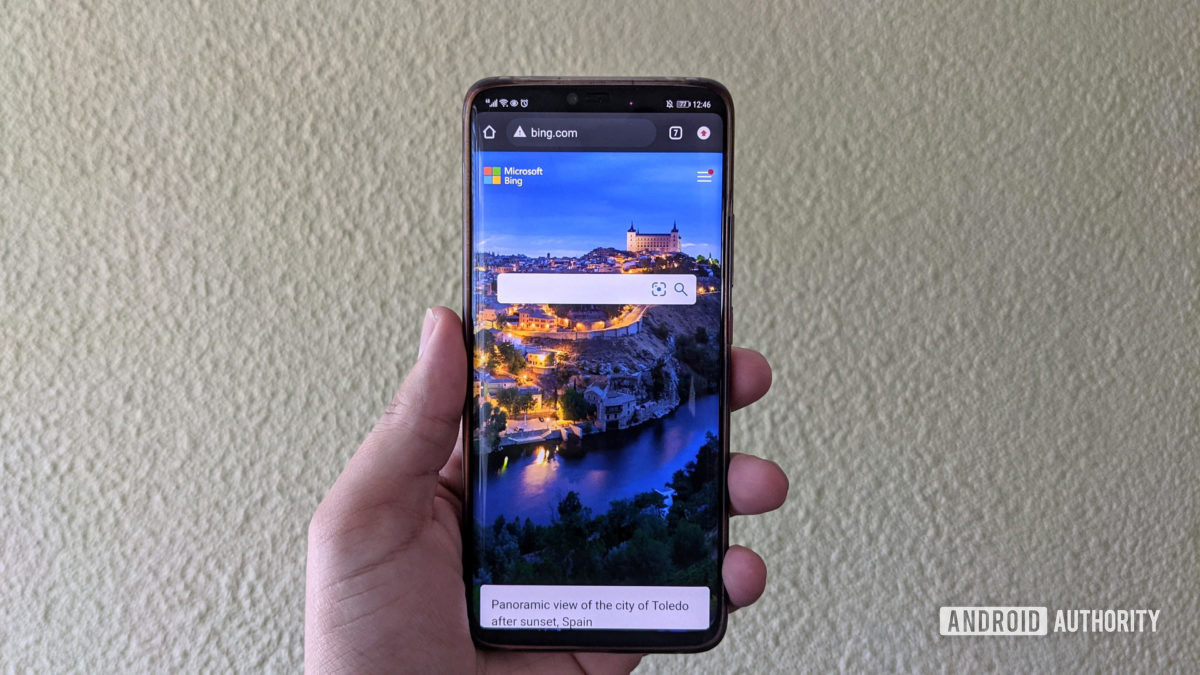
Credit: Hadlee Simons / Android Authority
- The most popular search term on Bing is “Google,” according to Google.
- The company uses this data to challenge the EU’s landmark $5 billion fine handed down in 2018.
In 2018, the EU slapped Google with a landmark $5 billion fine for abusing Android‘s dominance, pushing OEMs to use its search engine on phones. It’s still fighting to overturn this decision in court, and its latest rebuttal drags Microsoft’s Bing into the conversation.
According to evidence presented by Google’s lawyer in a Luxembourg court this week (via Bloomberg), consumers use rival search engines to access Google. The specific example provided was Bing. Google argues that “Google” is the most popular search term on Bing “by far” because consumers choose it over competing products, not because they’re forced to.
“Google’s market share in general search is consistent with consumer surveys showing that 95% of users prefer Google to rival search engines,” the defense added.
EU regulators would argue that Google doesn’t give rival search engines equal footing on Android, but it seems Google’s understanding is that even when given a choice, consumers would still flock to its product. In 2018, Google also argued that Android couldn’t be a monopoly as it competes with the likes of Apple in the smartphone market.
Google’s currently juggling several antitrust and anticompetitive cases worldwide in addition to the 2018 ruling. In the US, the company faces a suit brought by 36 states for abusing its control of the Play Store. The EU Commission is reportedly investigating Google Assistant‘s dominance on Android phones, which could see it face yet another suit in the bloc.
from Android Authority https://ift.tt/2Y20VaK
Subscribe to:
Comments (Atom)